Care for families
Lice treatment for kids
A calm guide for parents covering diagnosis, age-appropriate treatment, combing, school, siblings, and follow-up.
When a child has head lice, the emotional temperature can rise faster than the medical risk. Children may feel embarrassed, parents may worry about school, and everyone may want the fastest possible fix. Head lice do not spread disease, and they are not evidence of poor hygiene. A calm, age-appropriate plan protects the child and makes treatment easier to complete.
Confirm live lice before treating
Itching, a note from school, or a classmate with lice is a reason to check, not proof that your child needs medicine. Seat the child somewhere comfortable under bright light. Separate the hair into small sections and look especially behind the ears and at the neckline. A fine-tooth lice comb can help find a moving louse. Nits stay attached to hair, unlike dandruff or lint.
The American Academy of Pediatrics’ family site has a practical guide to signs of lice. If you still cannot tell, ask a pediatrician, school nurse, or pharmacist. Avoiding an unnecessary pesticide treatment is worth the extra check.
Match the treatment to the child
Age limits differ among lice medicines. Health history, allergies, irritated skin, pregnancy in an older teen, and previous product use may also affect the choice. Read the complete label before applying anything. For babies and very young children, contact a pediatrician first. The FDA advice for consumers stresses using approved products exactly as directed.
More is not better. Do not combine products, repeat a dose early, or leave medicine on longer than instructed. Protect the eyes, supervise the entire application, and rinse as the label says. Do not use flammable liquids, animal flea treatments, or room insecticides on a child. If your child has asthma or another condition that makes odors or application difficult, ask a clinician for guidance.
Give the child an honest preview before you begin. Explain how long the application and combing may take, whether the scalp might feel wet or cool, and when breaks are possible. Let an older child choose a show, audiobook, or snack for the session. Small choices restore a sense of control. Keep siblings occupied elsewhere so the person being treated is not teased or crowded.
Make combing tolerable
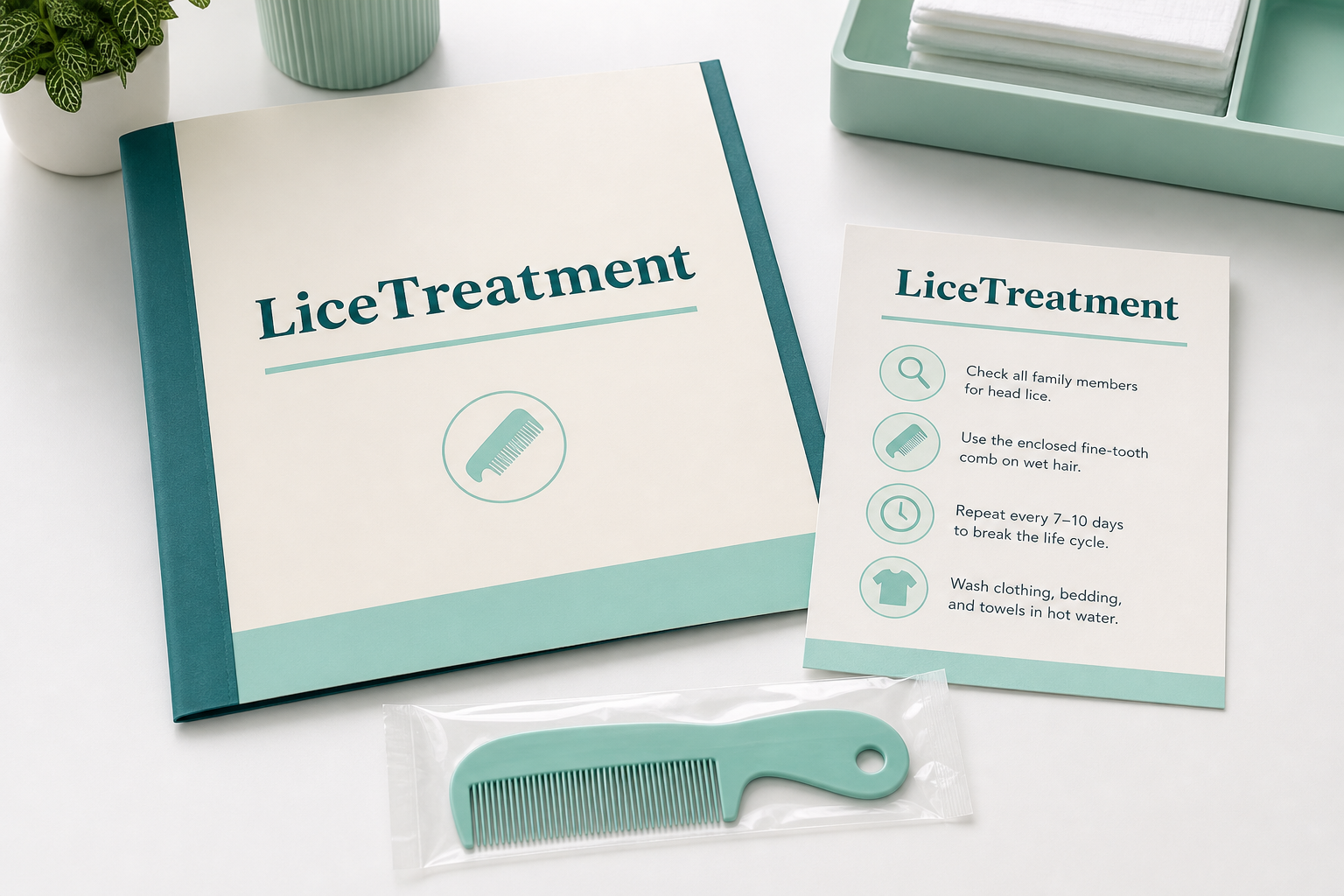
Combing can take time, particularly with long, curly, or thick hair. Set up entertainment, offer breaks, and explain what you are doing in plain language. Work in small sections from the scalp through the ends. Keep completed sections clipped aside and wipe the comb after each pass. Pulling hurriedly can make a child resist the next session, so comfort is part of completing the job well.
Follow the medicine label about conditioner and wet hair because products differ. Continue checks every two or three days for the next few weeks. Some treatments call for a second application on a specific day. The CDC treatment page explains why timing matters and what to do after an application.
Check siblings, but do not treat everyone automatically
Examine everyone in the household, especially anyone who shares a bed with the child. Treat people with confirmed lice and follow professional advice about bedmates. During the active period, discourage head-to-head contact and sharing brushes, hair accessories, hats, pillows, and towels. Children can understand this as a temporary practical rule, not a punishment.
Wash recently used bedding, towels, and clothes as recommended. Clean brushes and combs, and vacuum furniture or floors where the child recently rested. Pets do not need treatment. Large-scale spraying and frantic disposal of toys or furniture are unnecessary because head lice survive poorly away from people.
Handle school without shame
Tell the school or child-care setting so staff can follow local policy and provide useful notices or checks. Current pediatric guidance opposes excluding a child solely because nits remain. The HealthyChildren guide to head lice in children discusses return to school and why “no-nit” rules are not recommended.
Keep the conversation factual around your child. Lice can affect anyone, and blame does not help identify where close contact occurred. Avoid posting about another child or family. A brief message such as “we found lice, started treatment, and are doing the follow-up checks” is usually enough.
After the first treatment, write the next check and any required second dose on the family calendar. Parents are often managing laundry, school messages, and several heads of hair at once, so relying on memory can lead to an early or missed application. Record the product’s active ingredient too. If the plan fails, a pediatrician needs that detail to recommend a genuinely different option.
Know when to call the pediatrician
Get medical advice if your child is very young, the scalp has open sores or signs of infection, you cannot confirm what you found, or live lice remain after correct treatment. Call before switching products or repeating one that failed. Take note of the active ingredient, application date, amount used, and whether a scheduled second treatment was completed.
The goal is not to make the household perfect overnight. It is to treat the child safely, interrupt the lice life cycle, and confirm the result. With the right product, patient combing, scheduled follow-up, and a matter-of-fact tone, families can solve the problem without making a child feel like the problem.

Michael Santiago develops premium domain names and the companies behind them through OnlineBusiness.com. He founded i-newswire.com in 2007, later iNewswire.com, and helped build Newswire.com. The business sold in 2022 for $44 million. Brand, PR, and SEO work now runs through GoPR.com, with Signage.com as a live category case.